Background and Motivation
Gap 1: Cantonese-Based Learning
Most market tools prioritize Mandarin or English. This project emphasizes locally used Hong Kong Cantonese terms so children learn authentic vocabulary in their daily context.
Gap 2: AI for Preschool Learning
While LLMs and computer vision are growing in education, practical child-friendly use cases for preschoolers remain limited. The project translates AI capabilities into concrete learning loops.
Gap 3: Limited Digital Exposure Alternatives
The app experience is designed for short and focused interactions, helping families avoid unnecessary prolonged screen exposure while still enabling real-world vocabulary capture.
Project Objective
Develop an AI-powered Cantonese vocabulary learning platform centered on an app-based learning module, adaptive revision, personalized bedtime storytelling, and parent supervision analytics for sustained, measurable language growth.
Solution Architecture
The platform uses an app-based capture-to-learn flow and a centralized intelligence layer. It is composed of four core modules:
- Learning Module
- Revision Module
- Bed-time Story Module
- Supervision Module
These modules connect through shared learning records so that vocabulary captured during daily use can be reinforced through revision, bedtime narratives, and parent-facing analytics.
Methodology and User Journey
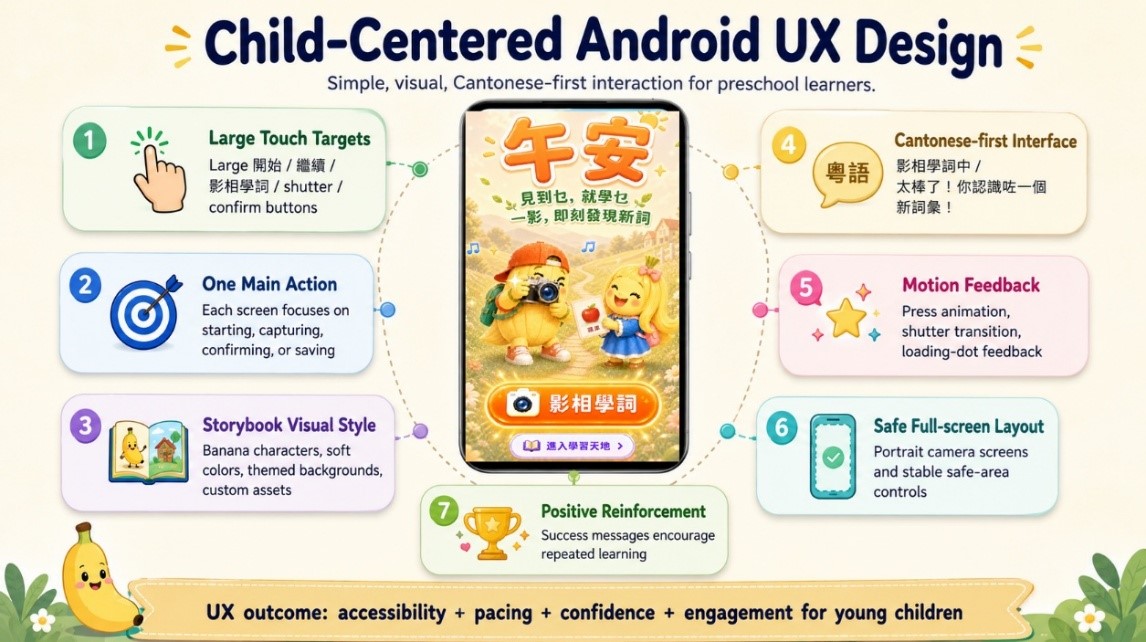
- Onboarding and session continuity keep learning uninterrupted during capture and review.
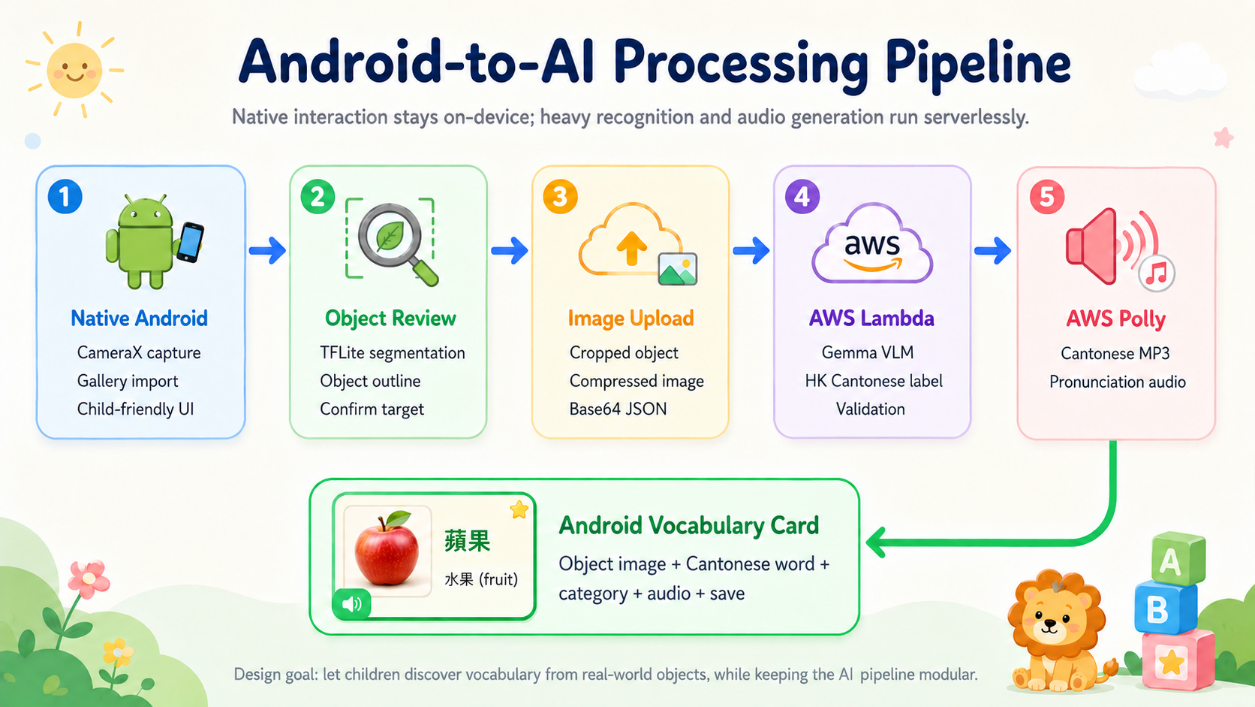
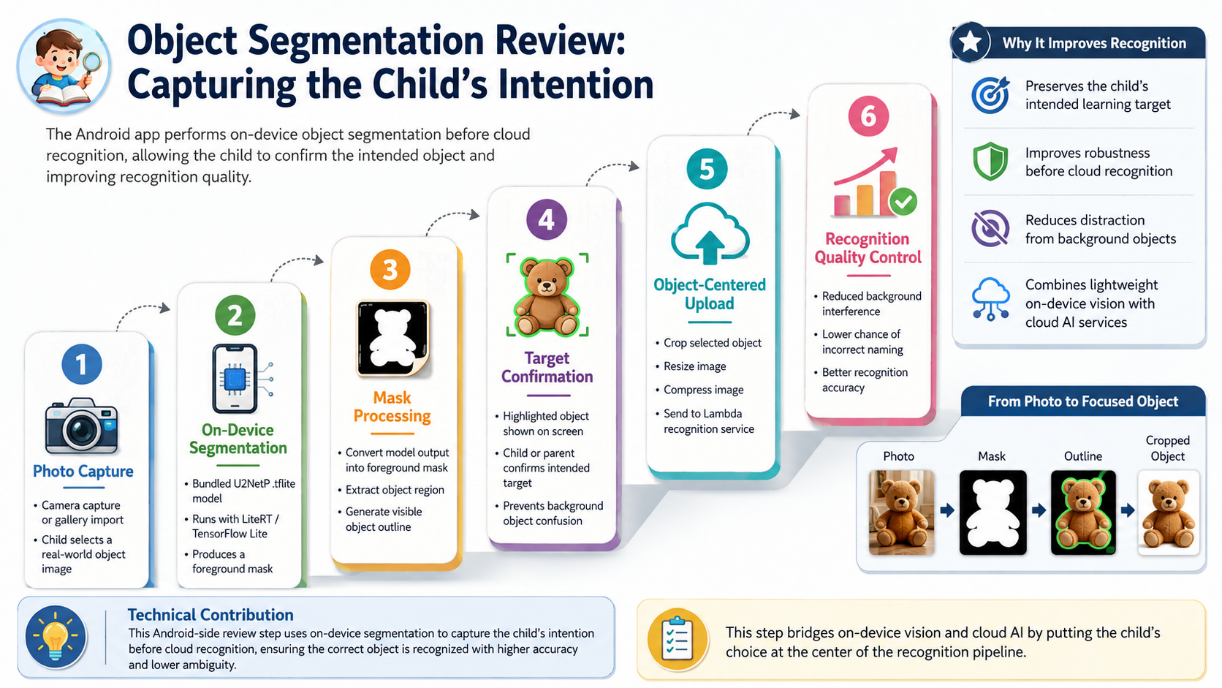
- After photo capture, on-device segmentation isolates the target object before recognition.
- Server-side recognition returns Cantonese output in a stable child-friendly format.
- The app displays a vocabulary card with one-tap audio playback for pronunciation practice.
- Revision intelligence tracks mastery and supports association-based recommendations.
- Daily bed-time stories are generated from learned vocabulary and delivered through TTS audio.
- Supervision dashboards provide parents with streaks, word counts, and learning-time insights.
This workflow keeps the implementation practical while preserving a clear upgrade path to full backend intelligence and deployment in later phases.